EELUME the ‘snake robot’ can fix pipelines on the ocean floor

The deep-sea oil and gas industry has a vast and costly infrastructure to maintain. Wells, other equipment, and thousands of kilometers of the pipeline must be installed, inspected, and repaired. Now, cutting-edge underwater drones and robots are being developed that could make the work safer, cheaper, and less polluting.

Among them is Eelume, a six-meter-long, snake-like robot kitted out with #sensors and a camera at each end. It can be kept at a docking station at depths up to 500 meters (547 yards) for six months, without being brought back to the surface. The self-propelling robot can travel up to 20 kilometers before needing to return to its station to recharge and can swap out parts for different tasks, including tools to operate subsea valves, and cleaning brushes to remove marine growth and sediments.

Maintenance work at many deep-water wells and pipeline systems is already carried out by unmanned vehicles. But these vehicles typically need to be transported to the offshore site on a fully crewed ship and then remotely operated from onboard the surface vessel. That can cost up to $100,000 per day, according to Pål Liljebäck, chief technology officer with Eelume Subsea Intervention, which developed the robot.

#Eelume can work autonomously on tasks assigned from a control room onshore, and send back video and data. Its snake-like design allows it to work in confined spaces and wriggle its body to stay in place in strong currents. By docking under the sea, it can be deployed whatever the conditions on the surface of the ocean.

Article by CNN Business

Subscribe to our newsletter for more interesting articles and updates

Apple files patent for ‘light-absorbing’ matt black finish for MacBooks

If you’ve always found Apple’s products too shiny, or insufficiently shadowy, you’ll be pleased by the company’s latest patent activity. A new patent application, , describes a new type of anodizing that can “absorb” light to make a matt black color look even darker,  reports. By etching small pores in the top layer, more light will be absorbed by the metal, giving a darker black that doesn’t reflect light.

The concept is in many ways reminiscent of the color #, which absorbs 99.965% of all light and is one of the darkest substances known to man.

Apple doesn’t specify in the patent that this would be used on a laptop, and indeed pictures of a phone, tablet, and smartwatch appear alongside a laptop in the related images. But the MacBook range is the most obvious application for such technology.

As usual, a patent application is not proof that a matt black MacBook is on the way – we wouldn’t, for example, bet money on such a color finish being offered for the new 14in MacBook Pro – but it certainly points us towards the development areas Apple currently finds interesting.

For more Patent application-related information check out our official page https://patentk.com/

Article by Macworld

The World’s First Rollable smartphone is coming in 2021

By CNET

LG’s tease of its Rollable smartphone at its CES 2021 press conference isn’t just for show. The Korean company will release the phone later this year, according to people familiar with LG’s plans. 

The brief glimpse of the phone was the second tease of the Rollable, which has a display that extends upward to create a larger, more tablet-like screen. Presumably, the bottom of the phone, when it’s in landscape mode, has a mechanism that furls and unfurls the display, similar to how its rollable OLED televisions work — but on a smaller scale. 

The LG Rollable only showed up in two videos bookending the press conference and the executives on stage didn’t mention the device. That led to speculation that it was only a concept device, not ready for prime time. TCL later Monday showed off two concepts for rollable phones, including a larger 17-inch tablet that unfurled from both ends, like a treasure map, but those appear to be far away from an actual product.

LG Rollable is the rollable smartphone from LG and could be the first commercially available rollable smartphone. Oppo has also showcased the rollable smartphone but it’s a concept and LG Rollable looks like will be a mass-produced device that people can actually buy. LG could unveil the LG Rollable in March 2021

Robotic guide dogs

By Science Focus, 2020

A student at Loughborough University has designed a “robotic guide dog” that will help support visually impaired people who are unable to house a real animal.

The product, designed by Anthony Camu, replicates the functions of a guide dog as well as programming quick and safe routes to destinations using real-time data.

Theia, named after the titan goddess of sight, is a portable and concealable handheld device that guides users through outdoor environments and large indoor spaces with very little input.

Using a special control moment gyroscope (CMG), Theia moves users’ hands and physically “leads” them – much like holding the brace of a guide dog.

The device is designed to process real-time online data, such as traffic density (pedestrians and cars) and weather, to guide users accurately and safely to their destinations.

It will have a fail-safe procedure for high-risk scenarios, such as crossing busy roads – pushing the user back into a “manual mode”, similar to using a cane.

Tactile virtual reality – Make VR easy to access

by  12th August 2020 in Science Focus

Researchers from Northwestern University have developed a prototype device that aims to put touch within VR’s reach, using a flexible material fitted with tiny vibrating components that can be attached to the skin.

The system, known as epidermal VR, could be useful in other cases as well, from a child touching a display relaying the gesture to a family member located elsewhere, to helping people with amputations renew their sense of touch.

In gaming, it could alert players when a strike occurs on the corresponding body part of the game character.

The team’s design features 32 vibrating actuators on a thin 15cm by 15cm silicone polymer which sticks on to the skin without tape or straps and is free of large batteries and wires.

It uses near-field communication (NFC) technology – which is used in many smartphones for mobile payment today – to transfer the data.

“The result is a thin, lightweight system that can be worn and used without constraint indefinitely,” says Professor John A Rogers, who worked on the project.

Scientists hope that the technology could eventually find its way into clothing, allowing people with prosthetics to wear VR shirts that communicate touch through their fingertips.

The bicycle wheel that “purifies” the air while it is in motion

by Alessio Iannicelli15 October 2020 in EnvironmentLifePrototypes 

Kristin Tapping – a student of industrial design at London South Bank University – has created a bicycle wheel with a filter to purify the air.

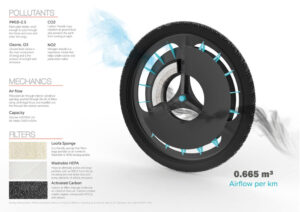
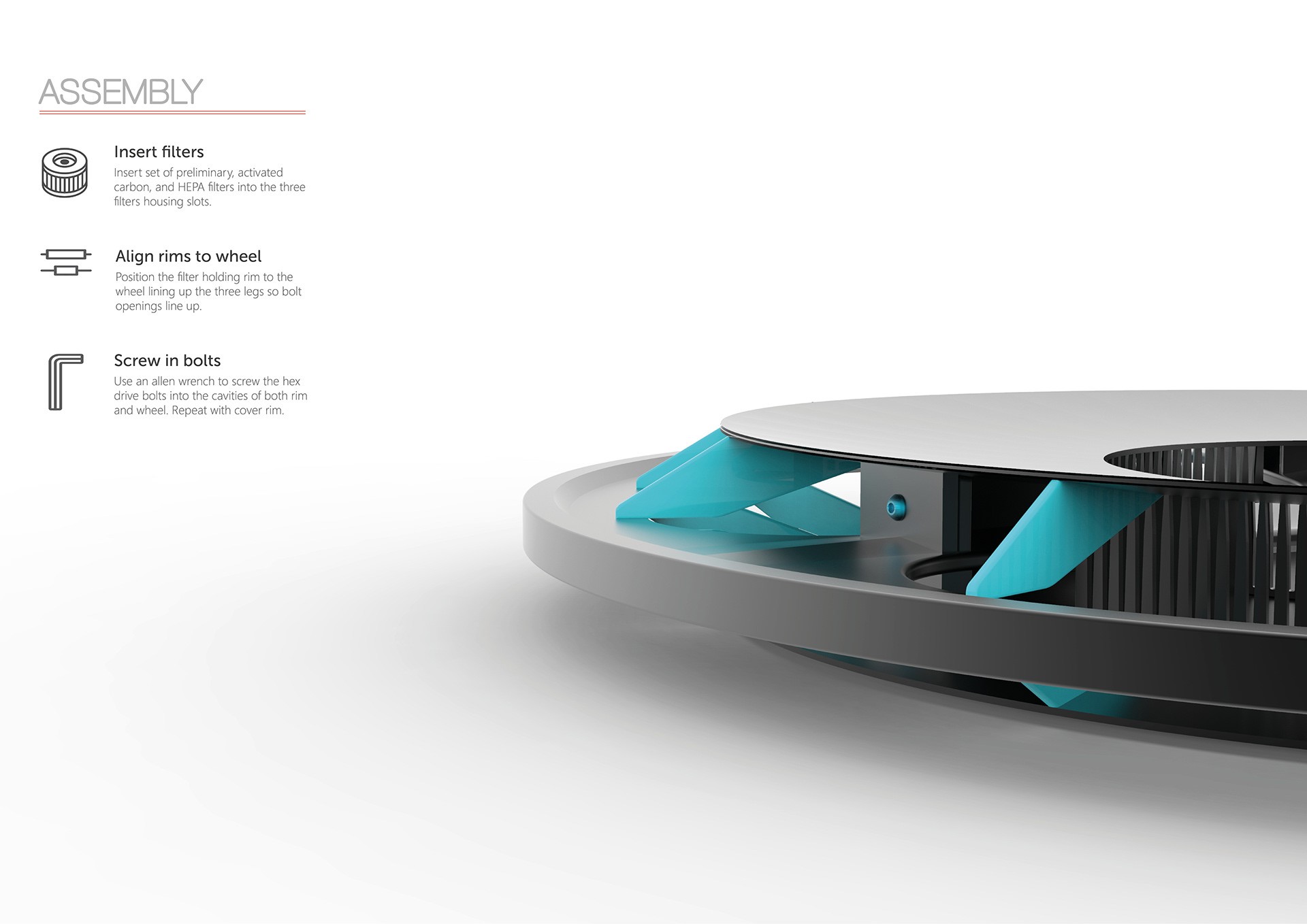
Is there a more ecological vehicle than a bicycle? Yes, a bicycle that “purifies” the air! It sounds absurd but it’s all true. Kristin Tapping – an industrial design student at London South Bank University – has created a bicycle wheel with a filter inside to purify the air. The project is called Rolloe and won the prestigious “Design Innovation in Plastics 2020” award. The idea behind it is simple but at the same time (potentially) ingenious. The wheel measures 600x600x60 mm and weighs just over a kilo. Inside, there is a filtering system consisting of three sponges. The first retains large particles, the second blocks pollen and dust while the third (with active carbon) traps gas molecules. In this way, the filter also removes volatile organic compounds. The filters can be dismantled, washed and reused. Kristin recommends replacing them once a week or after 250 kilometres.

Read also → Designed for cycling with ABS

The bicycle wheel that purifies the air

When the bike is in motion, air enters the wheel through a circular opening, passes through the filter and comes out purified. To facilitate the passage of air, there are also aerodynamic external fins. Kristin Tapping had the idea for Rolloe as she cycled through the streets of London. “I could see and smell the pollution from the tyres and exhaust pipes. I thought: why not use the movement of the vehicles to filter the air?”. The name Rolloe stands for Roll Off Emissions because it could have a strong environmental impact. According to a study conducted by the Design Innovation in Plastics 2020 commission, if 10% of London’s bicycles were equipped with this special wheel, about 266,865 m³ of air could be filtered every day. This value could double if bicycles were also equipped with Rolloe for the rear wheel.

A flying suit to save mountaineers in difficulty

 by Alessio Iannicelli02 October 2020 in Prototypes

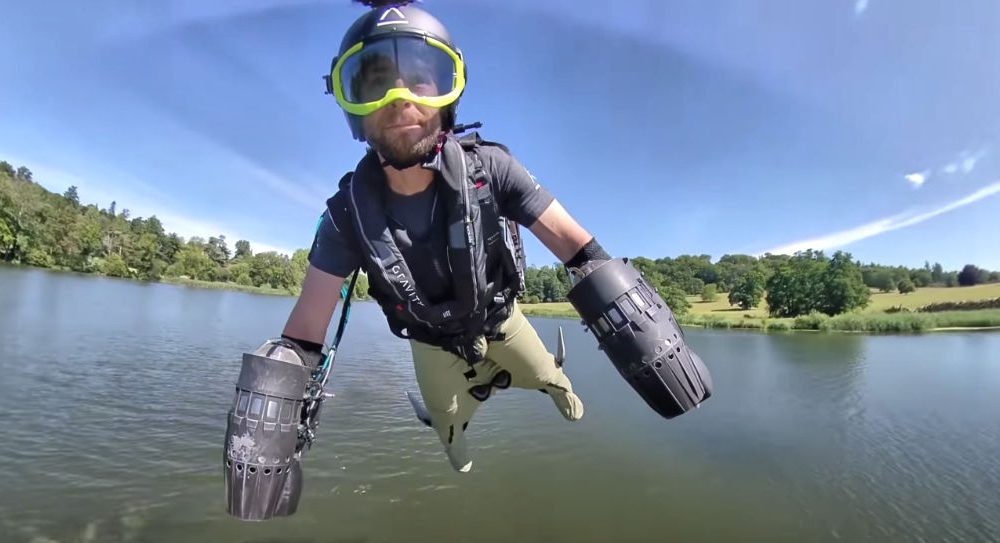
Gravity Industries has developed a flying suit that can reach an altitude of 3600 meters and reach 51 km/h: it will be used in Great Britain for mountain rescue.

A new superhero watches over the safety of mountaineers. At least in Great Britain. Gravity Industries – a British company specializing in the design and construction of flying suits – has developed a device designed specifically for mountain rescue. It is a flying suit that will add “superpowers” to the rescuers who have to intervene in case of emergency in the British mountains. Once worn, the suit allows you to hover vertically from the ground and fly with extreme speed and agility. Thanks to five turbines capable of developing 1000 bhp of power, the device can reach a speed of 51 kilometers per hour and an altitude of 3600 meters. These features make the suit particularly suitable for rescue and rescue missions at high altitude, drastically reducing the response time to requests for help. A simulation has shown that a paramedic can reach a person in difficulty in 90 seconds: on foot, on the other hand, it would have taken as long as 25 minutes. A difference of almost 24 minutes that, in an emergency, could make the difference between life and death.

A flying suit to save mountaineers in difficulty

At the moment, the flying suit is being field tested. The power and safety, design and weight will be improved in the coming months based on the feedback provided by the rescuers and mountaineers who will use it in this first testing phase. According to the developers, the wearable flight device would not require a particular patent to be used. It only takes a few minutes with an instructor to understand how it works and be able to fly safely. Or, at least, so says the inventor Richard Browning. At the end of the test phase, the flying suit will be made available to British Mountain Rescue and will be used for rescue missions requiring maximum speed.

High-temperature resistant cellulose bioplastic

by Mario Vincenzo La Rocca22 October 2020 in ChemistryNews

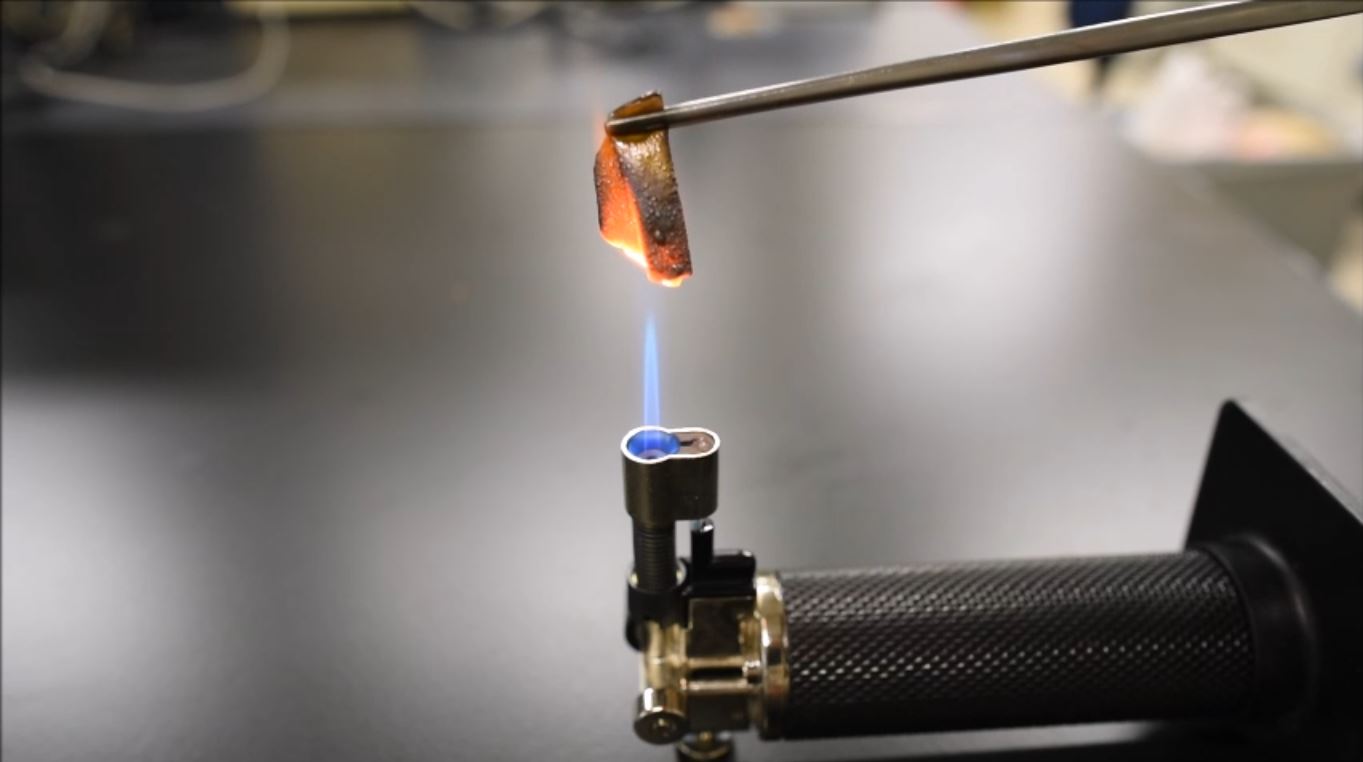
The new bioplastic resists high temperatures better than its rivals. Credits: JAIST

The new material, developed in collaboration between two Japanese universities, is totally biological and has the highest resistance to very high temperatures among bioplastics

The world’s industry is moving more and more towards an ecological philosophy. The goal, also set by international agreements, is to reduce the use of fossil fuels to zero by 2050 in favor of renewable and ecological sources. A large percentage of this directly concerns the production of plastics, whose basic components are derived from oil refining products. Several bioplastics are already used but have defects between physical and chemical properties. One of these is the poor resistance to caolre and flame. This greatly limits their possible use on a large scale and their diffusion.

A Japanese research team, which includes researchers from the University of Tokyo and the Japan Advanced Institute of Science and Technology, presented a very interesting bioplastic. the bhe study was published in the journal Advanced Sustainable SystemBioplastic is produced from a cellulose-based biomass, the same widely used to obtain paper and cardboard. The main components are cellulose, hemicellulose and lignin, three natural polymers that represent 90% of the material from which wood is made.

The researchers have exploited two particular aromatic molecules to bind together the different cellulose chains, ideally mimicking the vulcanization process of tire plastic. The result is a bioplastic that resists temperatures up to 740°C, a result never achieved before. The bioplastic has low density, comparable to those of Kevlar, Kapton and Zylon. The two properties make the new polymer suitable to replace many components used in complex weight-sensitive systems, such as motors for electrical machines. Bioplastics can also be used as heat-resistant insulation to create high-performance electrical devices. The discovery opens the door to a new scientific era for lightweight materials and a more sustainable society.

Tent-desk to “isolate yourself from noise” during smart working

by Alessio Iannicelli19 October 2020 in Eureka!InventionsLife

A Japanese company has designed a special desk-tent that allows you to isolate yourself from confusion and find the concentration you need during smart working 

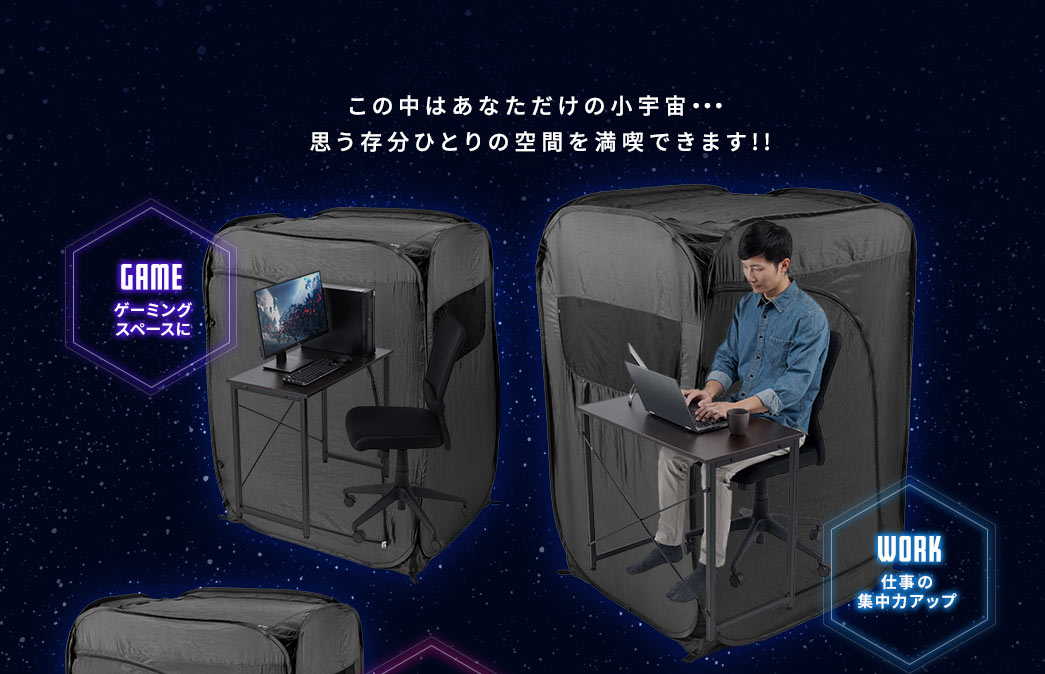
Tent-desk to "isolate yourself from noise" during smart working

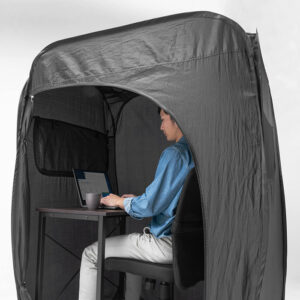
The Coronavirus emergency has changed the way we live and work. In the last six months, tens of thousands of workers around the world have experienced new ways of working telematically and remotely. Working from home certainly has advantages: it saves time, money and we don’t have to dress well to go to the office. But smart working also has its flaws, especially if you are forced to work in a house populated by noisy children, intrusive siblings or nosy parents. To help workers find the right concentration, a company in Japan has designed and put on sale a special “desk-tent” that guarantees privacy and total isolation. The structure is foldable and closable. It can be installed (in a few minutes) in the living room of the house and allows you to isolate yourself from the hustle and bustle of the home. In what way? Just watch the tutorial video made by manufacturer to understand how to find peace of mind.

Read also → The first eco-sustainable, self-sufficient and smart city will be born in China

The smart working desk-tent

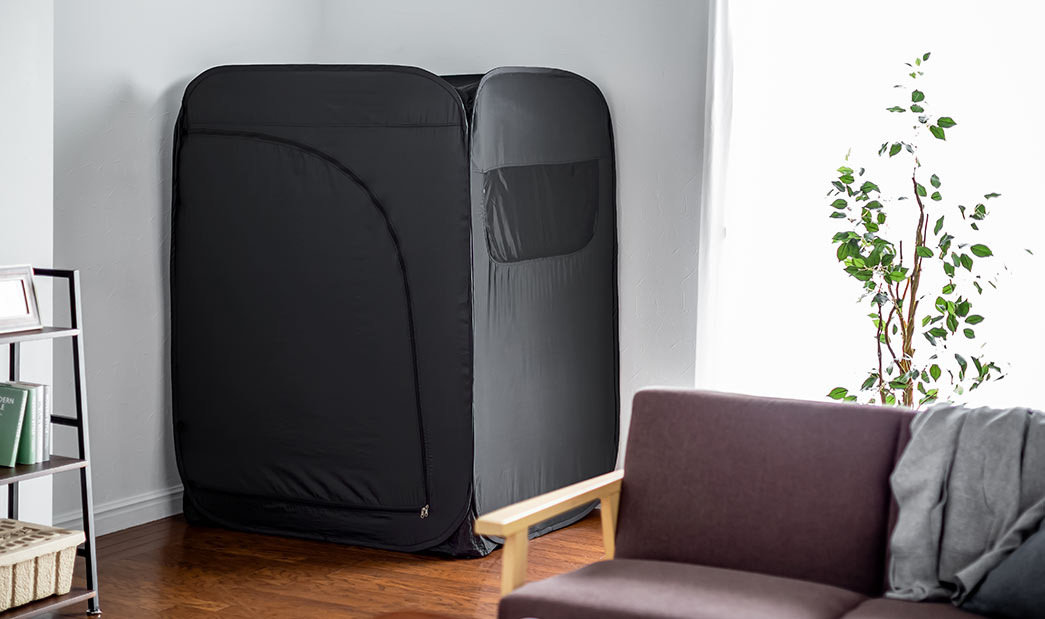
The tent is called 200-TENT001 and is presented as “an intimate and cosy space” designed especially for the smart working people. The base is circular and – once assembled – looks like a black fabric cubicle. Inside, there is enough space for a chair and a small desk where to place the PC. On the walls of the tent, there is a skylight and a small side window that allow natural light to enter. To work at night, you can hang a light bulb on a hook hanging from the ceiling. The Japanese designers have thought of everything and have provided pockets and compartments where to put water bottles or other small objects necessary to carry out their work. The sale price is 8000 Japanese yen, just over 70 euros.

Tent-desk to "isolate yourself from noise" during smart working